Why are you acting like China is a poor helpless victim to capitalism here. China chose to shift to capitalism at the end of the 1900s. And they can choose to impose stricter regulation on fossil fuel emissions. They choose not to because it hurts their bottom line. Simple as that.
The US and EU have controlled their emissions, while China’s continues to grow. China has the highest GDP in the world, and 7th highest GDP per capita, it has no excuse anymore.
Why are you acting like China is a poor helpless victim to capitalism here.
I didn’t. I gave a pretty dry analysis. Maybe ask yourself why that feels overly sympathetic to you.
China chose to shift to capitalism at the end of the 1900s.
That’s not a particularly accurate or useful description of China’s gambit to allow (mostly foreign) capital to exploit its people to build productive forces while maintaining overall control over sweeping aspects of their economy. If China simply switched to capitalism one then has to explain why it is so different from every other capitalist country. China’s trajectory is responsible for the vast majority of global poverty index improvements and this runs in dramatic contrast to the rest of the periphery that was already fully capitalist and continues to be. The redirection of funds and productive capacity to infrastructure, education, housing, direct poverty alleviation. The limits/outright bans on the financialization and speculation that characterize imperial core economies. The policy of embedding the party in large firms and turning developed industries into state-meditated co-ops. The lack of imperialist expansion required by monopolized, financialized capital. But I digress.
And they can choose to impose stricter regulation on fossil fuel emissions.
Sure. They could set them to any arbitrary level. What is the correct rate for it to be sustained? Remember, they’re almost alone in meeting targets among countries as advanced as they are. What level of production flight should they unilaterally sacrifice, if any, and who picks up the slack? At which limits do they begin sacrificing that production? Are their regulations too loose or strict for the optimal trajectory? Why are we focusing on one of the only countries meeting their targets and making progress on renewables?
They choose not to because it hurts their bottom line. Simple as that.
It is, in fact, not as simple as that and this ignores the active work and debate within China that produces the results we are discussing. They aren’t making their targets because that’s just what capitalism does. It’s deliberate, literally a result of deliberation, research, modeling, and pulling levers at the commanding heights.
The US and EU have controlled their emissions
lmfao you can’t be serious they can’t even meet their own targets. France is the only one that ever does and it’s because they became a primary source of nuclear weapons materials (producing low emission energy as a nice side effect).
while China’s continues to gro
[Edit: nearly] Everyone’s continue to grow. The targets are set, at the moment, for when they will hit peak and then begin dropping. China’s peak target is set to 2030 and they are slated to beat that.
China has the highest GDP in the world, and 7th highest GDP per capita, it has no excuse anymore.
Which part of “the only ones taking this seriously” is not registering?
Everybody’s economy is different, China is no snowflake. But I am not going to debate whether China’s capitalism is “good capitalism” or not, that feels like pulling hairs and is a digression as you yourself said.
How much should China regulate? At the very least enough to stop the growth. I think that’s a simple enough answer.
Everyone’s continue to grow
Not true. The US and EU have been lowering emissions for the past 20 years.
Everybody’s economy is different, China is no snowflake.
Actually it is. The trajectory of other peripheral countries is quite different. Compare to India, look at poverty stats when China is removed.
But I am not going to debate whether China’s capitalism is “good capitalism” or not, that feels like pulling hairs and is a digression as you yourself said.
You can’t debate the topic at all, clearly, but sure want to continue making the claim that it simply switched to capitalism. Maybe don’t say things your can’t bc defend?
How much should China regulate? At the very least enough to stop the growth. I think that’s a simple enough answer.
It doesn’t address the obvious trade-off I laid out. Why are India’s Paris commitments currently greater than zero?
So, what was China’s target for peak emissions? What does peak emissions mean? How are they doing regarding that target?
Not true. The US and EU have been lowering emissions for the past 20 years.
If you focus solely on production you can eke out such numbers, but it ignores the basics of imperialism and the aforementioned offshoring where industry doesn’t just magically become green. Shuffling around where industry is located didn’t decrease emissions by itself. Emissions targets do not stick exclusively to production and, I have to repeat again because you keep ignoring it, the US and EU are failing to meet their commitments. Yet you focus on one of the few countries that is. I wonder why. I wonder why you ignore 80% of what I say. Perhaps you should take a little break.
If you include consumption the plots look very different. And I’m not aware of easily available stats that track based on industry ownership.
Various global poverty stats produced by major entities, e.g. below $x per day by the World Bank (which keeps changing its metrics but that’s a different discussion). Capital apologists like (incidentally Epstein-tied) Pinker attempt to claim improvements to human development and well-being for capitalism, but these statistics are highly sensitive to exactly which countries you include as well as what metrics you use. But a trend re: global poverty alleviation is that China is responsible for most of it, sometimes the vast majority for certain statistics, and trends can reverse when you remove it from the equation.
India is a good metric for comparison. Similar population size, similar location, formerly colonized and formally liberated around the same time, but two very different paths. Capitalist economist Amartya Sen estimated tens of millions of deaths in India alone every decade in comparison to China.
World Bank (which keeps changing its metrics but that’s a different discussion)
i call that discussion the “the best macroeconomic model that doesn’t fuck up the quantification problem is only 60% accurate and my magic 8 ball gets better predictive results because it include i don’t know”
The reason I’m not debating China’s flavor of capitalism is because it’s irrelevant. They don’t get a free pass on carbon emissions no matter what economy they have.
And yes there’s a trade-off, regulating fossil fuels increases production costs. That’s the trade-off everybody makes.
Bottom line is that China’s emissions are huge and still growing. They are meeting commitments because those commitments were low in the first place. For example China only commited to peak emissions by 2030. The US and EU never needed to make such a commitment because they had already reached their peak in 2005.
And yes they perform a large portion of the world’s manufacturing, this “shuffling” of industries that you mentioned. But their lower regulations on emissions is precisely one of the reasons why manufacturing moves there. If they regulated more heavily, then some manufacturing would move out, but at least total global emissions would go down. Every country needs to participate in raising the cost of fossil fuels, in order for it to work.
The reason I’m not debating China’s flavor of capitalism is because it’s irrelevant.
You brought it up (and are reasserting it in this quote), same as how you bring up China unasked. Clearly you thought it was relevant, you are just trying to avoid responsibility for your claims.
They don’t get a free pass on carbon emissions no matter what economy they have.
Which part of “meeting or exceeding their Paris targets” reads as “get a free pass” to you?
And yes there’s a trade-off, regulating fossil fuels increases production costs. That’s the trade-off everybody makes.
Oh so the decision of what to target isn’t just “no increases immediately”? Glad we agree and can stop pretending it’s so simplistic. Though I see you neglected to acknowledge India’s targets.
Bottom line is that China’s emissions are huge and still growing. They are meeting commitments because those commitments were low in the first place.
The commitments of China were nearly an order of magnitude higher than the EU and US actually. By the way the US withdrew and is going hog wild.
For example China only commited to peak emissions by 2030.
And they are meeting their commitments, even exceeding them, despite being the primary seat of global production while the EU continues to deindustrialize.
The US and EU never needed to make such a commitment because they had already reached their peak in 2005.
In production, yes. They are deindustrializing. Their targets are much easier to hit, they follow the global capitalist economic trend re: imperialism, offshoring. It is actually much harder to reduce emissions while taking on the industry that’s being outsourced.
And yes they perform a large portion of the world’s manufacturing, this “shuffling” of industries that you mentioned. But their lower regulations on emissions is precisely one of the reasons why manufacturing moves there. If they regulated more heavily, then some manufacturing would move out, but at least total global emissions would go down.
It’s really not. You move production to China because overall it is vastly cheaper, primarily due to the much lower costs of labor reproduction and how tightly integrated industries are and can be due to infrastructure and colocation of technical ability. If you want to make something in the US something like half your cost goes to maintaining the humans doing it, and they’re expensive due to massive economic leeches: real estate, finance, insurance. When 80% of a paycheck goes to having a place to live (just renting), going to the doctor, and eating, your labor costs are just subsidizing rent seeking and finance.
Every country needs to participate in raising the cost of fossil fuels, in order for it to work.
Every country needs to meet their climate commitments. Is yours?
First off, I’m not talking about India. I’m not a fan of their emissions either, but this discussion is about China.
It is actually much harder to reduce emissions while taking on the industry that’s being outsourced.
That’s the thing, they don’t have to take on those industries. If everybody regulates emissions properly, then industries can’t just run off to whatever country has lower regulations. They are forced to adapt green energy alternatives.
And again, China’s commitments were low, meeting them has no meaning. Let’s see them actually start lowering their emissions like the other top nations.
First off, I’m not talking about India. I’m not a fan of their emissions either, but this discussion is about China.
So you simply can’t engage with this discussion in good faith and are throwing up arbitrary roadblocks so you don’t have to think about things like why climate targets differ relative to development and historical emissions.
I refuse your excuses. India is relevant. Either engage in good faith or I will ignore you.
So you bring up unrelated whataboutisms and then complain that people won’t follow them. I’m not throwing arbitrary roadblocks, you’re throwing arbitrary roads. And you want to claim you are acting in good faith? Laughable


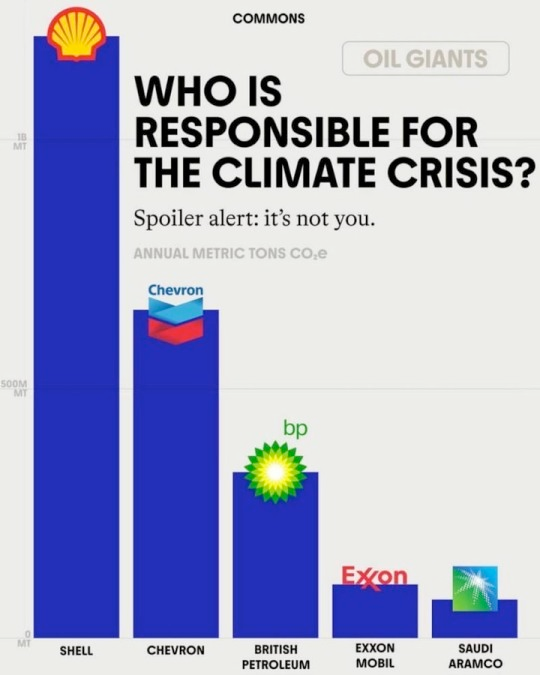
Why are you acting like China is a poor helpless victim to capitalism here. China chose to shift to capitalism at the end of the 1900s. And they can choose to impose stricter regulation on fossil fuel emissions. They choose not to because it hurts their bottom line. Simple as that.
The US and EU have controlled their emissions, while China’s continues to grow. China has the highest GDP in the world, and 7th highest GDP per capita, it has no excuse anymore.
I didn’t. I gave a pretty dry analysis. Maybe ask yourself why that feels overly sympathetic to you.
That’s not a particularly accurate or useful description of China’s gambit to allow (mostly foreign) capital to exploit its people to build productive forces while maintaining overall control over sweeping aspects of their economy. If China simply switched to capitalism one then has to explain why it is so different from every other capitalist country. China’s trajectory is responsible for the vast majority of global poverty index improvements and this runs in dramatic contrast to the rest of the periphery that was already fully capitalist and continues to be. The redirection of funds and productive capacity to infrastructure, education, housing, direct poverty alleviation. The limits/outright bans on the financialization and speculation that characterize imperial core economies. The policy of embedding the party in large firms and turning developed industries into state-meditated co-ops. The lack of imperialist expansion required by monopolized, financialized capital. But I digress.
Sure. They could set them to any arbitrary level. What is the correct rate for it to be sustained? Remember, they’re almost alone in meeting targets among countries as advanced as they are. What level of production flight should they unilaterally sacrifice, if any, and who picks up the slack? At which limits do they begin sacrificing that production? Are their regulations too loose or strict for the optimal trajectory? Why are we focusing on one of the only countries meeting their targets and making progress on renewables?
It is, in fact, not as simple as that and this ignores the active work and debate within China that produces the results we are discussing. They aren’t making their targets because that’s just what capitalism does. It’s deliberate, literally a result of deliberation, research, modeling, and pulling levers at the commanding heights.
lmfao you can’t be serious they can’t even meet their own targets. France is the only one that ever does and it’s because they became a primary source of nuclear weapons materials (producing low emission energy as a nice side effect).
[Edit: nearly] Everyone’s continue to grow. The targets are set, at the moment, for when they will hit peak and then begin dropping. China’s peak target is set to 2030 and they are slated to beat that.
Which part of “the only ones taking this seriously” is not registering?
Everybody’s economy is different, China is no snowflake. But I am not going to debate whether China’s capitalism is “good capitalism” or not, that feels like pulling hairs and is a digression as you yourself said.
How much should China regulate? At the very least enough to stop the growth. I think that’s a simple enough answer.
Not true. The US and EU have been lowering emissions for the past 20 years.
Actually it is. The trajectory of other peripheral countries is quite different. Compare to India, look at poverty stats when China is removed.
You can’t debate the topic at all, clearly, but sure want to continue making the claim that it simply switched to capitalism. Maybe don’t say things your can’t bc defend?
It doesn’t address the obvious trade-off I laid out. Why are India’s Paris commitments currently greater than zero?
So, what was China’s target for peak emissions? What does peak emissions mean? How are they doing regarding that target?
If you focus solely on production you can eke out such numbers, but it ignores the basics of imperialism and the aforementioned offshoring where industry doesn’t just magically become green. Shuffling around where industry is located didn’t decrease emissions by itself. Emissions targets do not stick exclusively to production and, I have to repeat again because you keep ignoring it, the US and EU are failing to meet their commitments. Yet you focus on one of the few countries that is. I wonder why. I wonder why you ignore 80% of what I say. Perhaps you should take a little break.
If you include consumption the plots look very different. And I’m not aware of easily available stats that track based on industry ownership.
i’m a trained economist and i don’t know what this means. why would china be included when looking at india?
Various global poverty stats produced by major entities, e.g. below $x per day by the World Bank (which keeps changing its metrics but that’s a different discussion). Capital apologists like (incidentally Epstein-tied) Pinker attempt to claim improvements to human development and well-being for capitalism, but these statistics are highly sensitive to exactly which countries you include as well as what metrics you use. But a trend re: global poverty alleviation is that China is responsible for most of it, sometimes the vast majority for certain statistics, and trends can reverse when you remove it from the equation.
India is a good metric for comparison. Similar population size, similar location, formerly colonized and formally liberated around the same time, but two very different paths. Capitalist economist Amartya Sen estimated tens of millions of deaths in India alone every decade in comparison to China.
i call that discussion the “the best macroeconomic model that doesn’t fuck up the quantification problem is only 60% accurate and my magic 8 ball gets better predictive results because it include i don’t know”
The reason I’m not debating China’s flavor of capitalism is because it’s irrelevant. They don’t get a free pass on carbon emissions no matter what economy they have.
And yes there’s a trade-off, regulating fossil fuels increases production costs. That’s the trade-off everybody makes.
Bottom line is that China’s emissions are huge and still growing. They are meeting commitments because those commitments were low in the first place. For example China only commited to peak emissions by 2030. The US and EU never needed to make such a commitment because they had already reached their peak in 2005.
And yes they perform a large portion of the world’s manufacturing, this “shuffling” of industries that you mentioned. But their lower regulations on emissions is precisely one of the reasons why manufacturing moves there. If they regulated more heavily, then some manufacturing would move out, but at least total global emissions would go down. Every country needs to participate in raising the cost of fossil fuels, in order for it to work.
You brought it up (and are reasserting it in this quote), same as how you bring up China unasked. Clearly you thought it was relevant, you are just trying to avoid responsibility for your claims.
Which part of “meeting or exceeding their Paris targets” reads as “get a free pass” to you?
Oh so the decision of what to target isn’t just “no increases immediately”? Glad we agree and can stop pretending it’s so simplistic. Though I see you neglected to acknowledge India’s targets.
The commitments of China were nearly an order of magnitude higher than the EU and US actually. By the way the US withdrew and is going hog wild.
And they are meeting their commitments, even exceeding them, despite being the primary seat of global production while the EU continues to deindustrialize.
In production, yes. They are deindustrializing. Their targets are much easier to hit, they follow the global capitalist economic trend re: imperialism, offshoring. It is actually much harder to reduce emissions while taking on the industry that’s being outsourced.
It’s really not. You move production to China because overall it is vastly cheaper, primarily due to the much lower costs of labor reproduction and how tightly integrated industries are and can be due to infrastructure and colocation of technical ability. If you want to make something in the US something like half your cost goes to maintaining the humans doing it, and they’re expensive due to massive economic leeches: real estate, finance, insurance. When 80% of a paycheck goes to having a place to live (just renting), going to the doctor, and eating, your labor costs are just subsidizing rent seeking and finance.
Every country needs to meet their climate commitments. Is yours?
First off, I’m not talking about India. I’m not a fan of their emissions either, but this discussion is about China.
That’s the thing, they don’t have to take on those industries. If everybody regulates emissions properly, then industries can’t just run off to whatever country has lower regulations. They are forced to adapt green energy alternatives.
And again, China’s commitments were low, meeting them has no meaning. Let’s see them actually start lowering their emissions like the other top nations.
So you simply can’t engage with this discussion in good faith and are throwing up arbitrary roadblocks so you don’t have to think about things like why climate targets differ relative to development and historical emissions.
I refuse your excuses. India is relevant. Either engage in good faith or I will ignore you.
So you bring up unrelated whataboutisms and then complain that people won’t follow them. I’m not throwing arbitrary roadblocks, you’re throwing arbitrary roads. And you want to claim you are acting in good faith? Laughable
schmalexa, adjust numbers for per capita emissions
I addressed that here