It relies on legality, not honor. E.G. with GPL, or code with a proprietary license. It’s the threat of losing their job, getting sued or whatever that discourages plagarism.
Ah I get your point now. Yes, ultimately both policies would rely on honor.
I’d argue plagiarism is different, though. If a codebase stipulates ‘don’t plagiarize,’ that’s… common morality. Not many contributors are going to argue ‘well, I want to plagiarize.’ They wouldn’t advertise it in any project they contribute to.
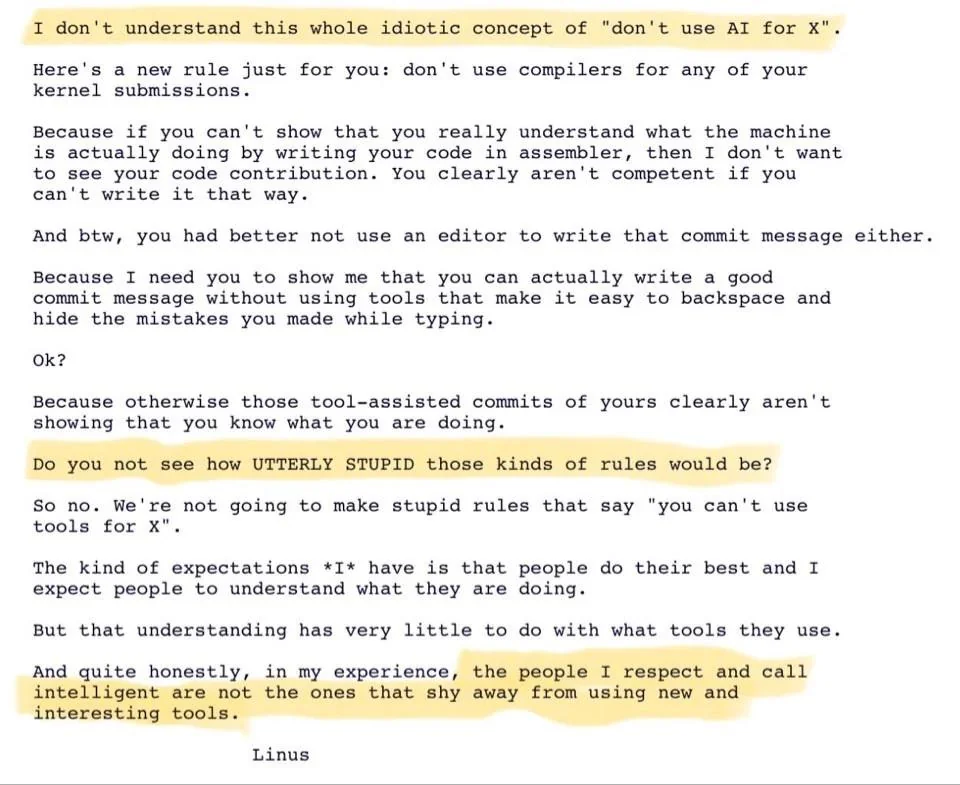
Dictating what tooling to use is different. That’s going to fall under ‘personal choice’ for more contributors. And they may feel compelled to hide tool use for that particular project, when they would otherwise show its use publicly in others.
In other words, forbidding tools like, projects runnings be telling contributors to forgo something they’re used to using public. That’s going to trigger more lack-of-disclosure and rule-breaking from devs that otherwise wouldn’t do that.


It relies on legality, not honor. E.G. with GPL, or code with a proprietary license. It’s the threat of losing their job, getting sued or whatever that discourages plagarism.
Non-point elements removed to help you focus.
Ah I get your point now. Yes, ultimately both policies would rely on honor.
I’d argue plagiarism is different, though. If a codebase stipulates ‘don’t plagiarize,’ that’s… common morality. Not many contributors are going to argue ‘well, I want to plagiarize.’ They wouldn’t advertise it in any project they contribute to.
Dictating what tooling to use is different. That’s going to fall under ‘personal choice’ for more contributors. And they may feel compelled to hide tool use for that particular project, when they would otherwise show its use publicly in others.
In other words, forbidding tools like, projects runnings be telling contributors to forgo something they’re used to using public. That’s going to trigger more lack-of-disclosure and rule-breaking from devs that otherwise wouldn’t do that.